
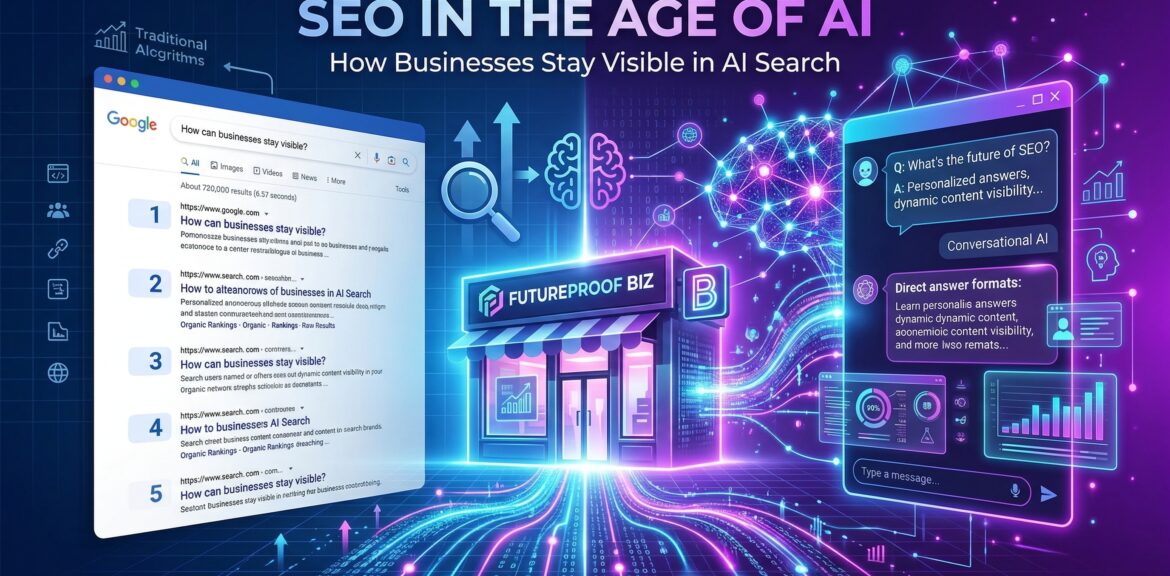
The Evolution of Search
For nearly two decades, online discovery followed a familiar pattern.
A customer searched Google.
Google returned a list of websites.
Businesses competed to rank on page one.
Today, that model is evolving.
AI-powered search tools such as ChatGPT, Google AI Overviews, Gemini, and Perplexity increasingly generate direct answers instead of lists of links.
Instead of presenting ten options, AI often recommends one.
This shift changes how businesses gain visibility online.
From Search Results to AI Answers
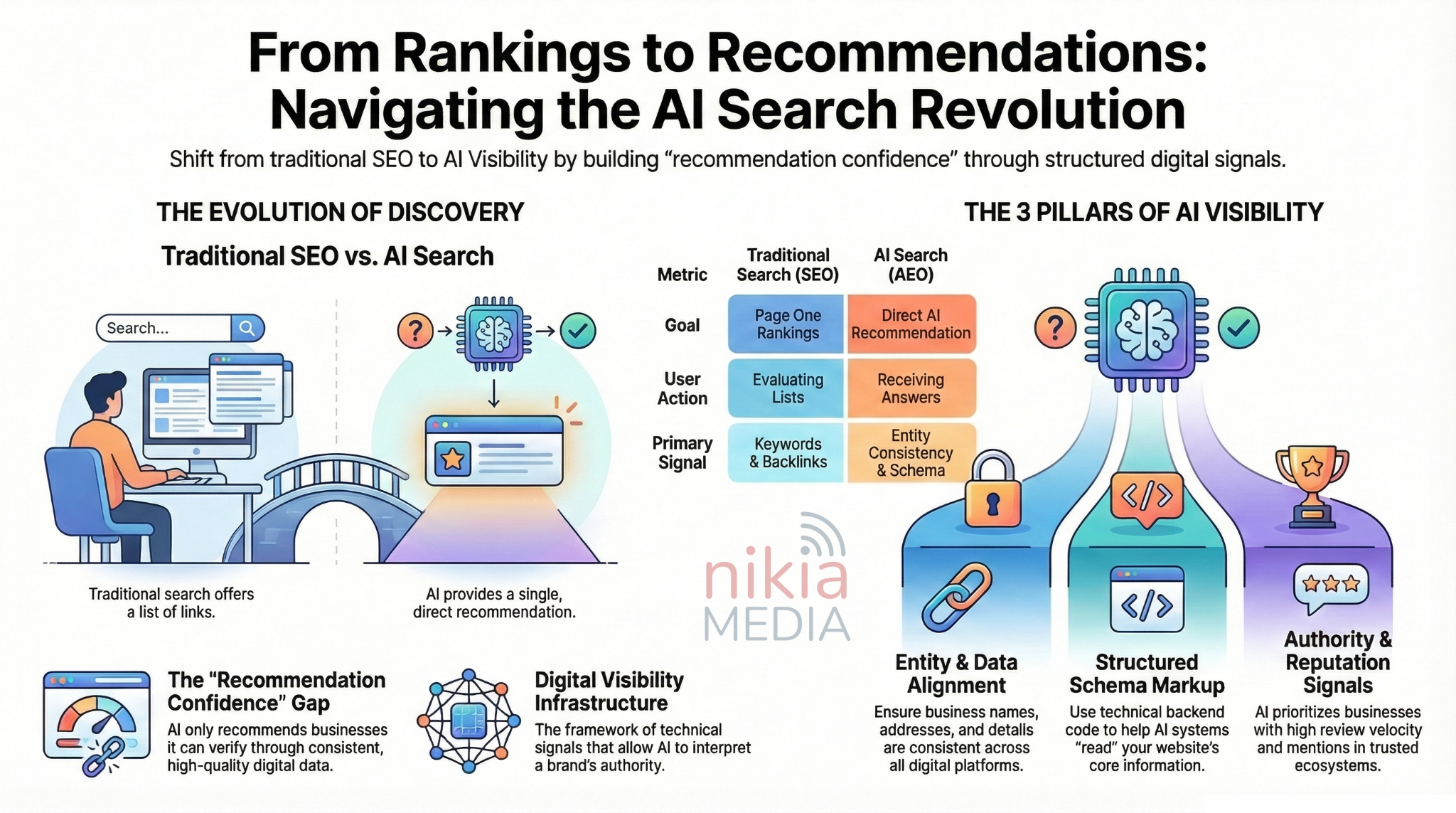
Traditional search engines required users to evaluate multiple websites.
AI search tools attempt to provide the answer directly.
When someone asks:
• “Best marketing consultant near me”
• “Top CPA in Palm Beach County”
• “Best contractor in Fort Lauderdale”
AI systems analyze available data and generate a recommendation.
This means businesses are no longer competing only for rankings.
They are competing for AI recommendation confidence.
How AI Systems Evaluate Businesses
AI systems analyze multiple types of signals to determine credibility.
These include:
• entity identity consistency
• structured website data
• authority mentions across trusted sources
• review activity and reputation signals
• knowledge graph connections
The more consistent these signals appear across the web, the more confident AI systems become when recommending a business.
Why Strong Businesses Sometimes Disappear
Many established businesses assume strong reputation alone guarantees online visibility.
Unfortunately, AI systems cannot interpret reputation unless it is structured digitally.
A company may be highly respected locally but still appear invisible to AI search tools if its digital signals are fragmented.
This is why businesses with weaker real-world experience sometimes appear in AI recommendations first.
Their digital signals are simply clearer.
The Rise of AI Visibility Infrastructure
Businesses that remain visible in AI search environments focus on visibility infrastructure.
This means structuring digital signals so AI systems can confidently interpret authority.
Key components include:
• entity alignment across platforms
• schema markup and structured data
• authority mentions across trusted ecosystems
• ongoing review velocity
• knowledge graph reinforcement
Together, these signals form the foundation of modern AI visibility.
Is Your Business Structured for AI Search?









Pingback:10 Affordable Marketing Tactics for Start-ups and Small Businesses - Nikia Media, Inc.